Article: Whisky casks: how oak, time and a Welsh coastal warehouse shape what is in your glass
Whisky casks: how oak, time and a Welsh coastal warehouse shape what is in your glass
New make spirit runs off the still as clear as water. Everything that turns it into whisky, its colour, much of its flavour and all of its smoothness, happens in the cask.
Some whisky writers reckon the wood accounts for 60% or more of a malt whisky's flavour. Whatever the exact figure, the cask is the longest and least hurried part of the story. Here is what actually goes on inside one, and how we choose ours at In the Welsh Wind.

How long does whisky need to age?
In Wales, spirit has to spend at least three years and a day in a wooden cask before it can be called whisky. To carry the protected name Single Malt Welsh Whisky, it must also be:
- matured in Wales, in wooden casks of no more than 700 litres
- bottled in Wales, at 40% ABV or more
- made from 100% malted barley at a single Welsh distillery, with Welsh water
The Welsh rules ask for wood but, unlike Scotch, do not insist on oak. The official specification also describes the style it hopes for: a lightness of character that is not overwhelmed by the cask. That suits us. We want the barley to be heard.
What the cask actually does
Maturation is not storage. Three things happen at once.
- The wood adds. Alcohol draws compounds out of the oak: vanillin for vanilla, lactones for coconut and cream, tannins for dryness and grip, spicy phenols for clove. Toasting or charring the inside of a cask breaks the wood down and makes these easier to reach.
- The wood takes away. A charred cask acts like a filter, softening the rougher, sulphury notes of young spirit.
- The air joins in. Oak breathes. As the seasons warm and cool, the spirit soaks into the staves and back out again, and slow contact with oxygen rounds the edges and builds fruitier, more complex flavours.
And if the cask once held something else, sherry, port, wine or rum, some of that character lingers in the wood and passes into the whisky too.
Whisky cask types and the flavours they bring
Two things decide most of a cask's character: the oak it is made from, and what it held before.
American oak (Quercus alba) is rich in vanillin and lactones, giving sweet, creamy notes of vanilla, coconut and caramel. European oak (Quercus robur) is tighter grained and carries far more tannin, so it brings dried fruit, spice, nuttiness and a drier, more structured finish.

| Cask | Usually made from | What it brings | Where you will find it in our range |
|---|---|---|---|
| Ex-bourbon | American oak | Vanilla, honey, coconut, soft spice; golden colour | Brychan, Ceredig, Meirion |
| Sweet sherry | European oak | Dried fruit, Christmas cake, deeper amber | Rhif Un |
| Palo Cortado sherry | European oak | Nutty, savoury, dried citrus; a rare style between amontillado and oloroso | Rhif Un |
| Marsala | European oak | Dried fruit, brown sugar, gentle spice | Meirion |
| Port | European oak | Red berries, plum, a rosy tint | Brychan, Ceredig |
| Red wine | European oak | Red fruit, gentle tannin, colour | Brychan, Rhif Un |
| Rum | Varies | Brown sugar, tropical fruit, toffee | Our earlier rum cask finish release |
Sherry cask whisky is the classic rich style, while ex-bourbon is by far the most common cask in whisky. Some distilleries mature in one cask for the whole time; others move the whisky into a second cask for a few months at the end, known as a cask finish.
Size, fill, climate and the angel's share
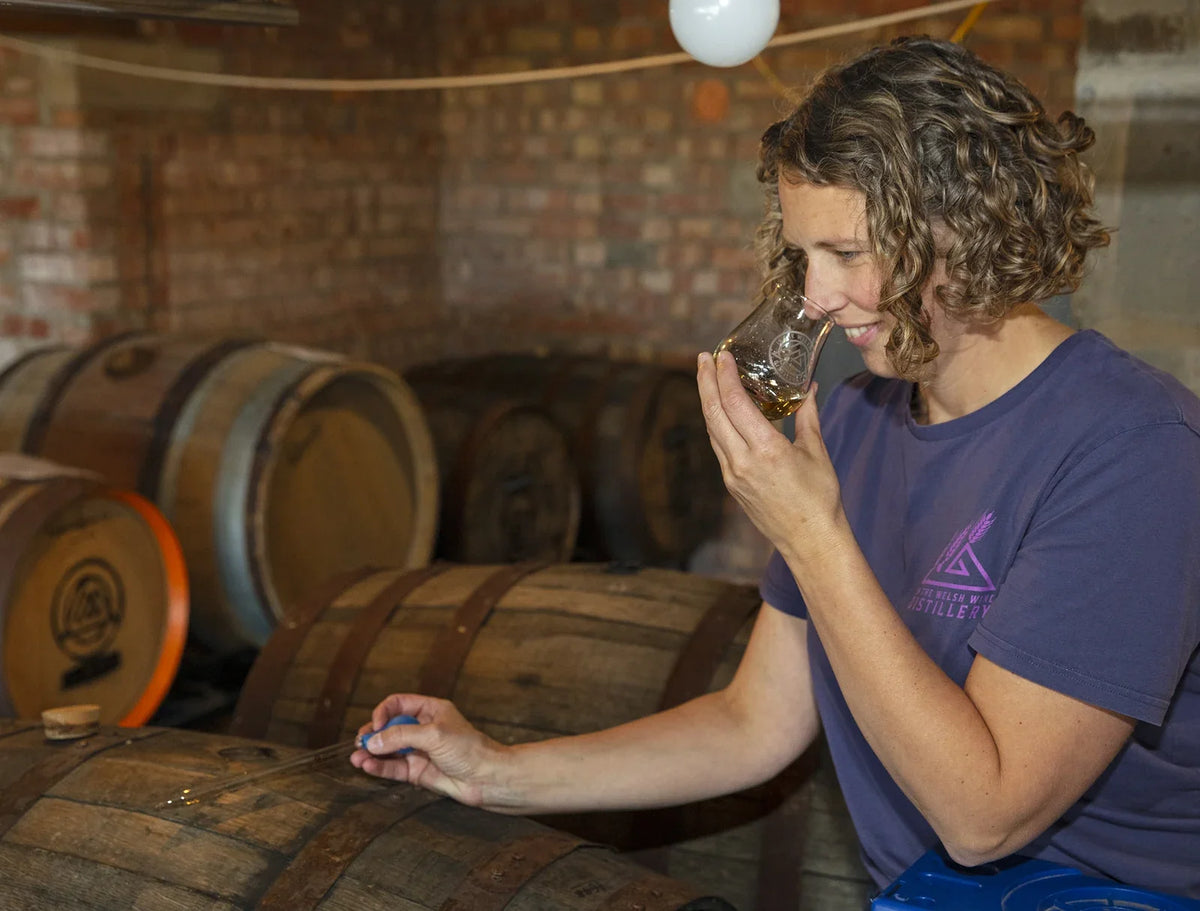
Size. A smaller cask puts more spirit in contact with wood, so it matures faster and picks up cask character sooner. Most of our own whisky matures in 200 litre casks. Our 30 litre casks, a fraction of the size, are mainly filled for cask owners.
First fill or refill. A cask's first fill of whisky takes the most from the wood and from whatever it held before. Each refill gives a little less, letting the spirit speak more.
Climate. Our casks mature at the distillery in Tanygroes, a short walk from Cardigan Bay. West Wales is mild and damp, and in humid conditions alcohol escapes through the wood slightly faster than water, so the strength of the whisky slowly drifts down as it ages. Warmer, drier places tend to see the opposite.
The angel's share. All casks lose some whisky to evaporation, traditionally called the angel's share. In Scotland's cool, damp climate it averages around 2% a year, more in small casks and in a cask's first couple of years. It is the price of time in wood, and the reason a cask yields fewer bottles than went in.
Cask strength. When the whisky comes out, it can be bottled at whatever strength the cask has reached (cask strength whisky), or brought down with water to a set strength. Ours is usually bottled at 46% or above and never chill filtered, so the oils and flavour stay in.
How we choose our casks
Our green malt spirit is fresh and grassy, with cut grass, green tea, melon and golden sultanas at its heart. A heavy cask could bury that, so we choose wood that complements the barley rather than masks it.
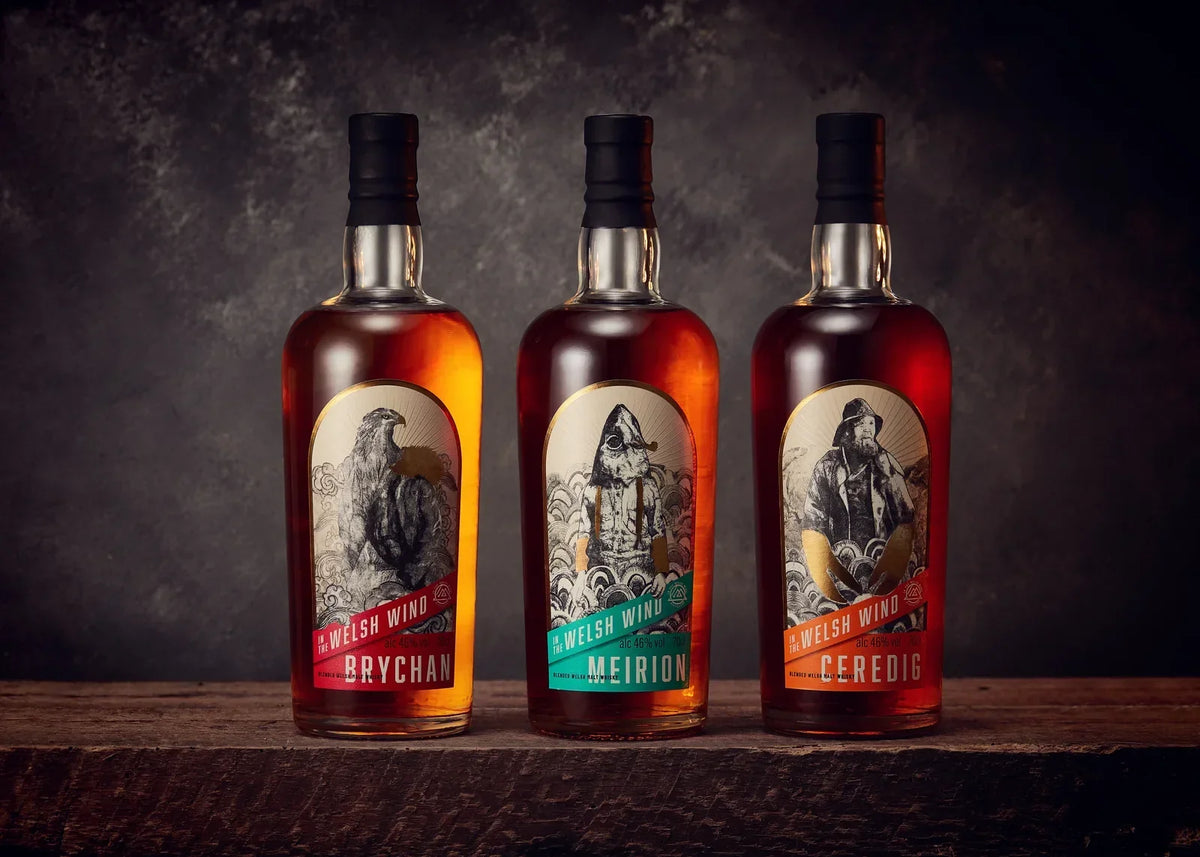
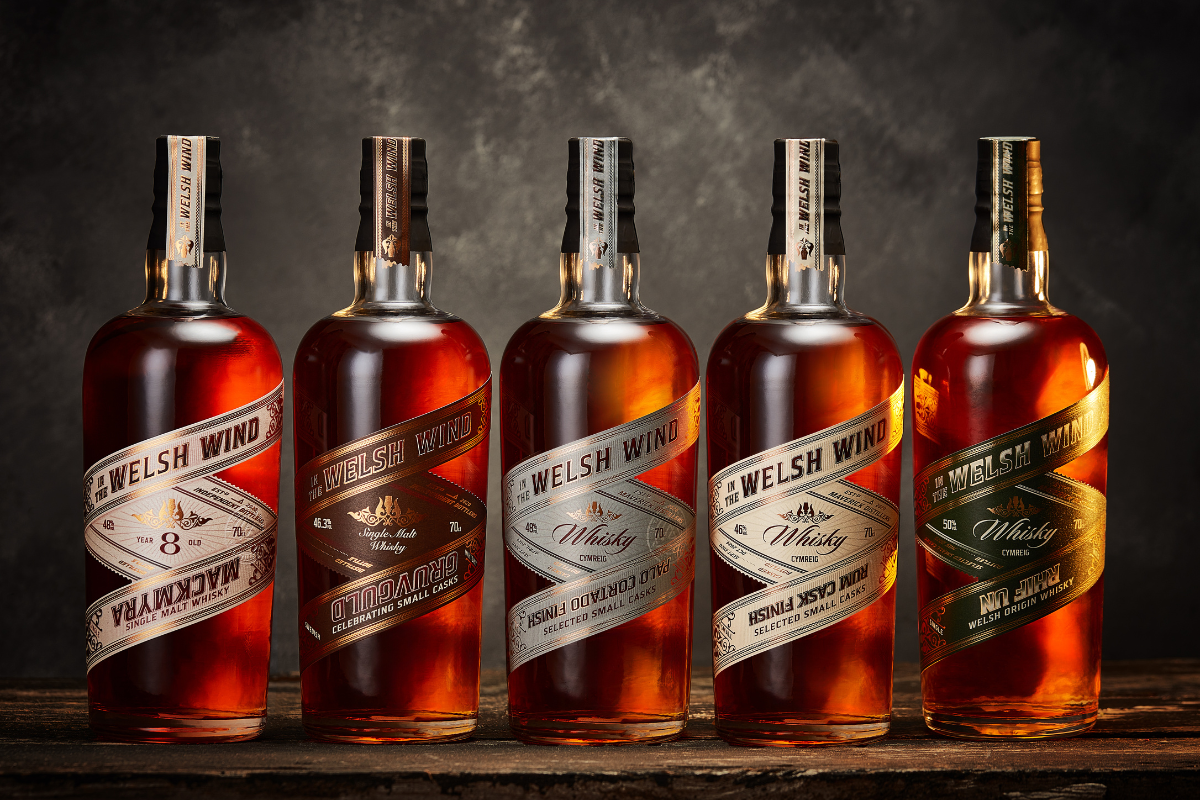
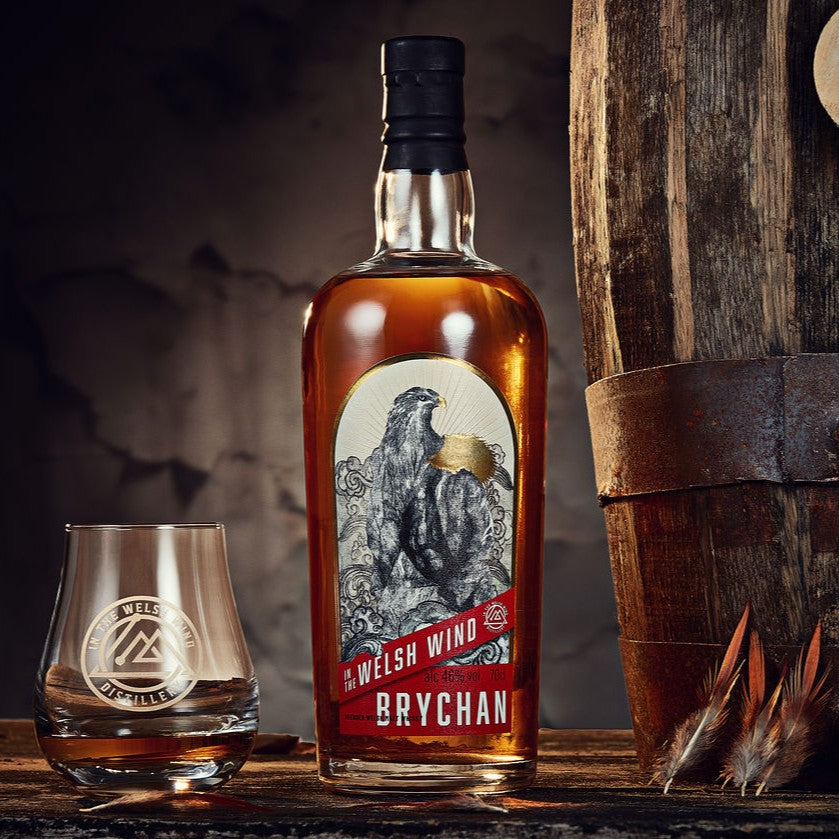
For Rhif Un, our first Welsh Origin single malt, that meant Palo Cortado sherry, red wine and sweet sherry casks: enough fruit and nuttiness to frame the barley, without stepping in front of it. In Ceredig, our green malt whisky sits alongside kilned barley whisky from ex-bourbon and port barrels, the vanilla and red berry notes meeting the raw grain. Brychan draws on ex-bourbon, port and red wine casks, and Meirion pairs a Marsala cask with ex-bourbon.
Every cask of our own spirit is filled, matured and emptied here at the distillery, and none of it leaves Wales to be aged elsewhere.
Choose your own cask

If all this has you wondering what your own whisky would taste like, you can find out. With whisky cask ownership at In the Welsh Wind, you choose:
- the barley: kilned, for classic biscuit and malt notes, or our green malt, for cut grass and green tea
- the seasoning: golden rum, dry sherry, Palo Cortado, sweet sherry, ruby or vintage port, red wine, sweet white wine or tequila, or an unseasoned cask
- the strength: cask strength or 46%
Your 30 litre cask is filled with new make from our stills and matured here for three years and a day, with a fourth year available. You can visit it, taste a sample each year, and at the end take home around 22 to 40 bottles with your own label.
Or simply pour a glass of Welsh whisky, and taste what the wood has done.